
Thinking Outside the Box
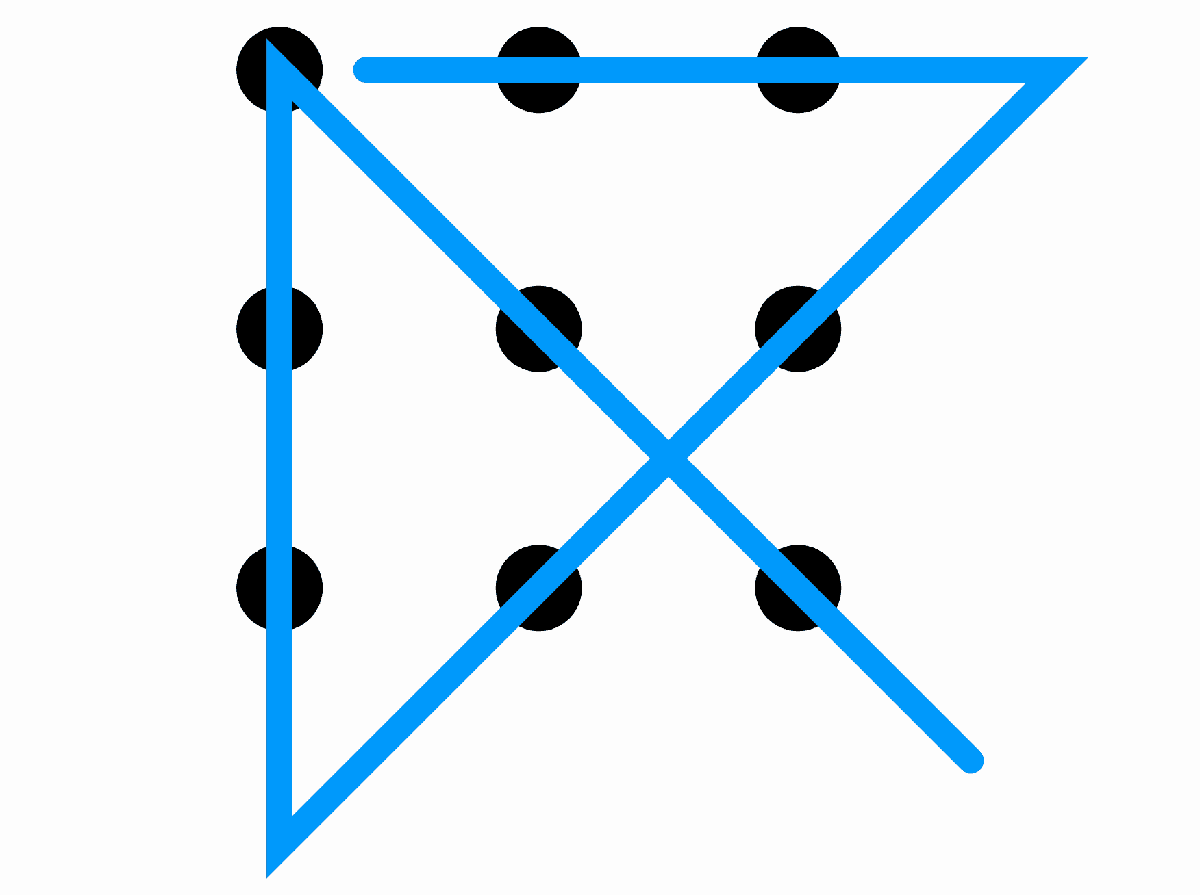
Happy Tax Day! Before getting into TimeSentry, let’s chat quickly about puzzles and boxing.
The nine dots puzzle asks the solver to draw a single line to connect nine evenly spaced dots (3 rows of 3), without lifting the pencil. The original solution requires the solver to draw the line such that it extends beyond the boundaries of the 3x3 square formed by the dots. It is the original puzzle that garnered the phrase “think outside the box.” The nine dots puzzle shows up in publication as early as 1914, meaning it’s been over a century since it first came out and yet remains as tricky today as it was then if you don’t know the solution.
The box frames our perception.
Thinking inside of the box, consider the boxing ring. One of the great boxing strategies of all time was the rope-a-dope. From Muhammad Ali (“Rumble in the Jungle”) to Manny Pacquiao, the rope-a-dope strategy entails raising the guard while passing the kinetic energy of the opponent’s punches to the ropes. Expanding to the octagon, we have the ground and pound — an MMA fighting style in which the fighter pins the opponent and strikes repeatedly. Basically the polar opposite. Both are valuable. Both get you wins notched.
What does this have to do with TimeSentry? The two strategies are the inversions of the same idea. When you have an advantage, press it. When you have a disadvantage, shunt the kinetic energy outward while keeping an eye open for opportunities to strike back. As it stands, we are deep in the bloodsport of capitalism. While we swim in a blue ocean with our AI productivity tooling, we also aim to displace the existing time tracking line item with a better solution, a red ocean, so to speak. Fittingly, our brand color is purple, a blend of red and blue. To survive, we need to press our advantages and stay alive while seeing opportunities through our disadvantages. Our biggest advantage is thinking outside the box.
Most of the past two weeks were spent on customer discovery and strategic planning. We refined our ICP and the outreach is much better targeted now. We had some great conversations across multiple industries — restructuring, PR, engineering — and learned a lot about our product, our work habits, and the problem that we are solving.
For example, we learned that our product really suits high performing teams. Low performing teams may occasionally need the accountability of manual tracking. But high performing teams are different. With a high performing team the time records are much more administratively burdensome and irrelevant. They are much more taxing for high performers than low performers, because high performers are thinking high-level and accountable for end results — they don’t think in terms of hours. We are thinking through this takeaway and what it means.
We also learned that we really need to track our own hours. To stay close to the problem and the solution. I’ve been tracking them using TimeSentry and it’s a breeze! But I’ve also learned by meticulously tracking my own time where the product is strong and where it isn’t. Every CEO and PM should use their own product if they can.
On a very positive note we recently started shipping more features and I’m occasionally personally shocked by the accuracy of our system. I thought we’d take much longer to get to the accuracy we are getting to. But sometimes TimeSentry just hits different. Which is Gen Z slang for it gets my timesheet perfect on the first try.
Until next week, Joseph